
Short answer: Shira now has a Team plan: one shared workspace where you and up to nine colleagues build roadmaps together, for $39 a month in total. One person owns it and pays, and everyone else joins by invitation, free. Its job is the unglamorous center of planning, which is getting everyone to look at the same plan.
The plan is the easy part
Drafting a plan takes an afternoon. Aligning on it takes a month. Finance wants it tighter, a regional lead wants her market earlier, sales wants the launch moved, and the freelancer who built half the content calendar would like to know what, exactly, she is building toward. Most of what we call planning is the work of getting those people to look at the same thing and mean the same thing by it.
That work gets harder when the team is spread out. In an office, alignment leaks in through the walls: the hallway conversation, the glance at someone’s screen. Remotely it only happens on purpose, in meetings, and nobody looks forward to meeting number six.
Misalignment often starts with versions
Two people can disagree about priorities and still have a good conversation. They cannot have it if one is looking at Tuesday’s deck and the other at Thursday’s spreadsheet. A lot of alignment problems are version problems in disguise: not a disagreement about the plan, but about which plan.
One plan to align around
The Team plan gives the plan a single home. You create a workspace, give it a name and invite up to nine colleagues. Roadmaps built in it are there for everyone in it, whenever they open it. A regional manager adds her part at the end of her day and you see it at the start of yours. Nobody has to schedule a call to find out where the plan stands, because opening the workspace is the answer.
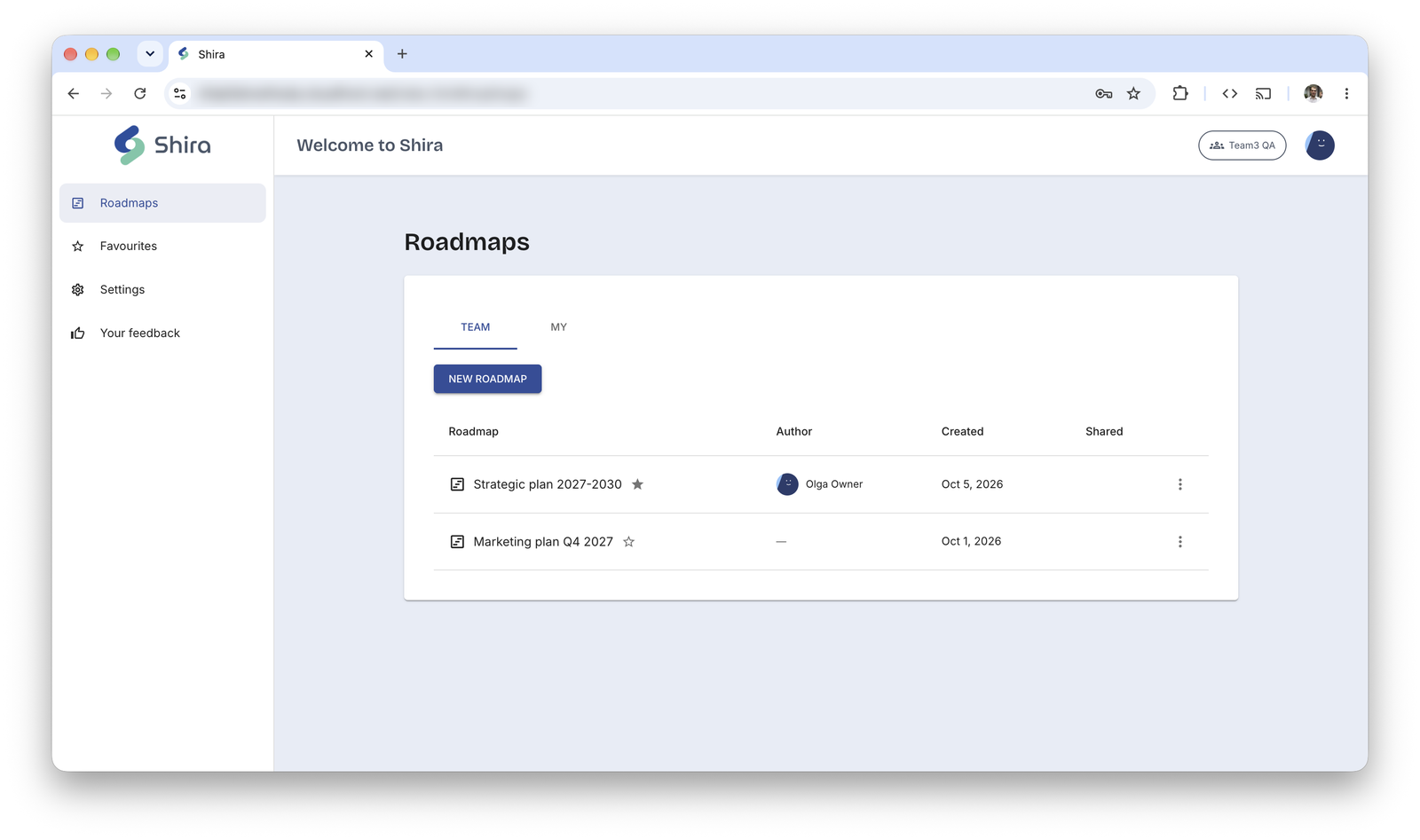
To be clear about what this does not do: it will not decide whether Q3 belongs to the launch or the rebrand. People still have to have that conversation. What it does is make sure everyone is arguing about the same roadmap.
Collaborators in the workspace, stakeholders on the link
Not everyone who needs to be aligned needs to be building. The people who build go into the workspace, up to nine alongside you. The people who only need to see where things stand, the CFO, the board, the client, are better served by what Shira has always offered: a live, read-only link that shows the current plan, instead of an attachment from three Thursdays ago.
Staying aligned after the meeting
Alignment decays. The plan is agreed on Thursday, and by the following Wednesday three things have moved and nobody can say which. Shira’s snapshots help here. Save one when everyone agrees, and later compare against it to see what was added, changed or removed. What we agreed becomes something you can point to, rather than something people remember differently.
Only one person has to pay
The workspace owner holds the subscription, $39 a month for the whole team. Collaborators do not need one. They get an invitation, join, and work. They do not see billing or team settings either, and that is not just hidden in the interface: it is closed to them on the server as well.
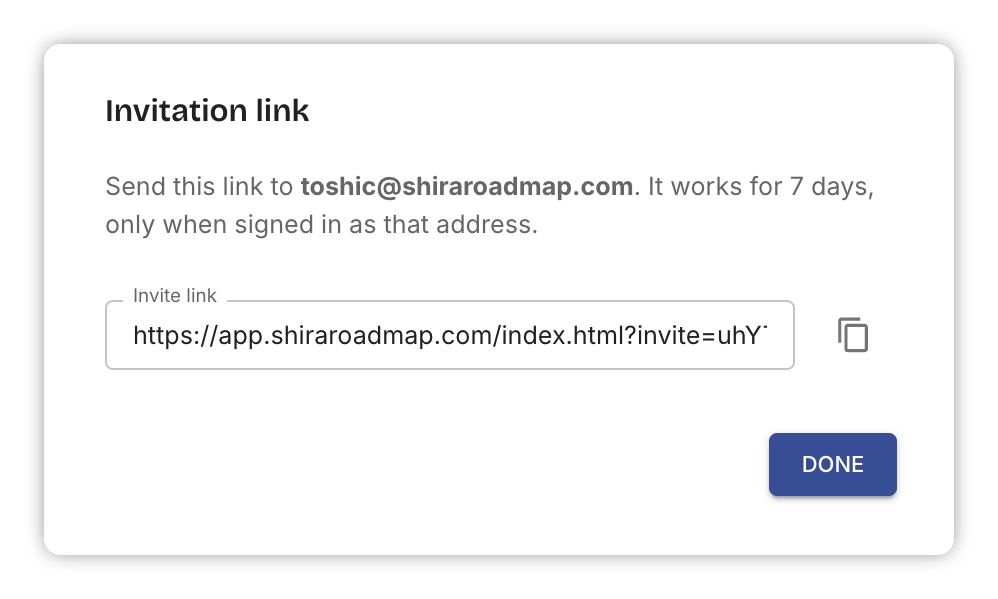
Invitations are personal. Shira gives you a link to send, and you can send it however your team already talks. The link works only when the person is signed in with the address you invited, and only for limited time, so a link pasted into a busy team channel is not an open door.
For people who work with more than one team
Plenty of people are only partly on a team: the freelancer, the consultant, the colleague who also runs a side project. Joining a team does not touch your own Shira account. Your own workspace stays yours, the team’s sits next to it, and a picker in the account menu switches between them.
You stay in charge
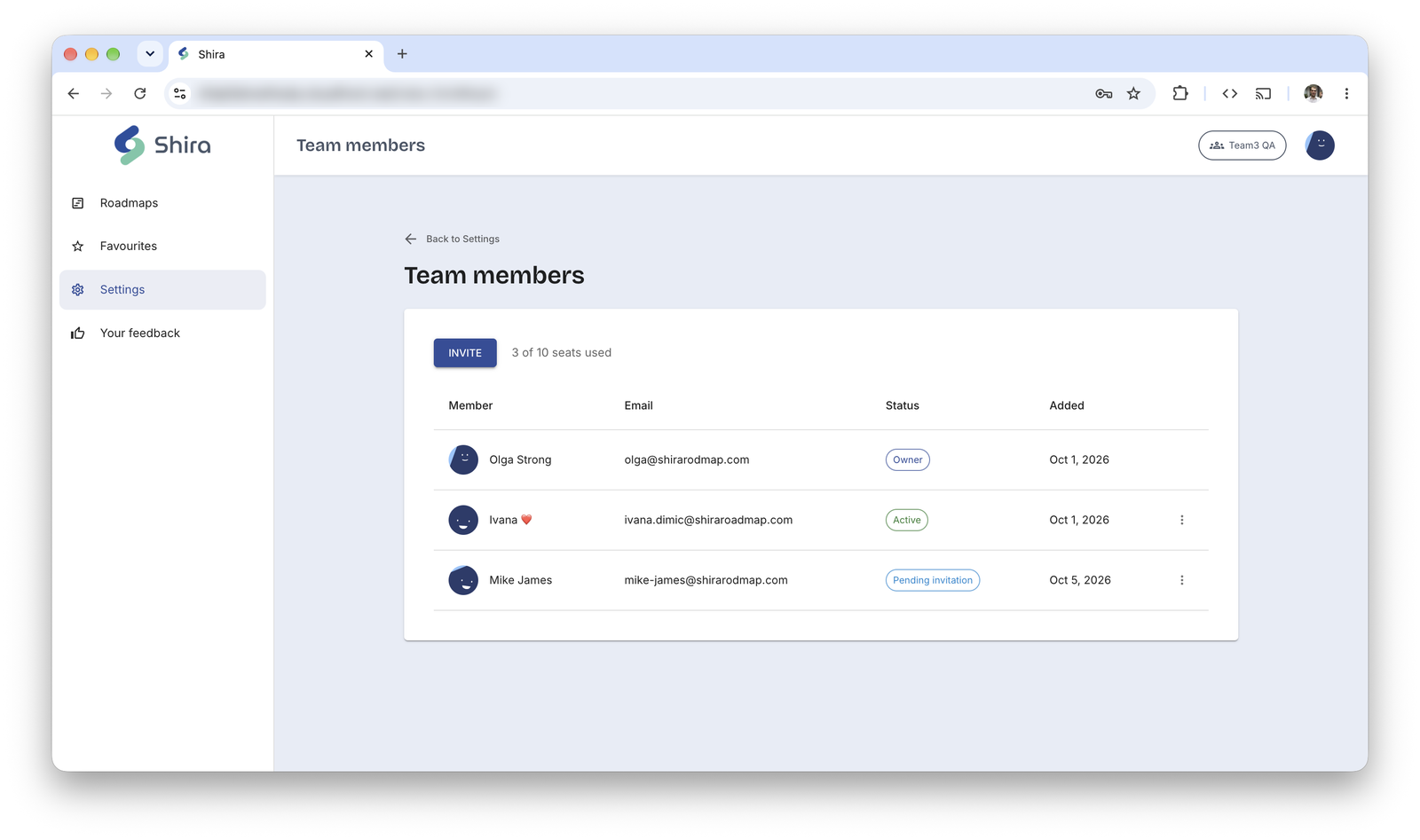
The owner decides who is in. The workspace has ten seats, which is you plus nine collaborators, and open invitations count, so you cannot overshoot. When someone leaves the project, you disable them: access ends straight away, the seat stays reserved, and you can switch them back on later. Remove a disabled member and the seat frees up, though they would need a new invitation to return. If the team subscription ever ends, collaborators lose access to the workspace, and if you subscribe again it comes back with the same name, seats and members.
Pro or Team?
Pro stays at $5 a month for one person. Team is $39 a month for up to ten, and it is where other people can build with you. A full house works out at $3.90 a person. Ten separate Pro plans would cost $50 and leave you with ten separate workspaces, which is more or less the problem we started with.
Try it
Create an account at app.shiraroadmap.com, choose Team subscription and name your workspace. If your team hits something Shira cannot do yet, tell us at support@shiraroadmap.com.
FAQ
Do my collaborators need to pay?
No. Only the workspace owner has a subscription. Collaborators join by invitation and work in the shared workspace without one.
How many people can be in a team?
Ten, including the owner. Open invitations count toward the ten.
I already have a Pro account. What happens if a colleague invites me?
Nothing happens to your own roadmaps. Your Pro workspace stays separate, and you switch between it and the team workspace from the account menu.
What happens if I cancel the team plan?
Collaborators lose access to the team workspace, and keep their own if they have one. If you subscribe again, the workspace returns with the same name, seats and members.