
How it works? - Shira Editor
Introduction
Last updated: August 27th 2026
Everything the editor can do — building activities and milestones, organizing them into categories, shaping the timeline, and getting the result out as a file, an image, a slide or a link.
Try now
Go to shiraroadmap.com/demo and make your first roadmap. No account needed.
The editor at a glance
One screen: a floating toolbar at the top, the roadmap title beneath it, and the canvas — a row per category, a timeline header across the top, and your activities and milestones inside.
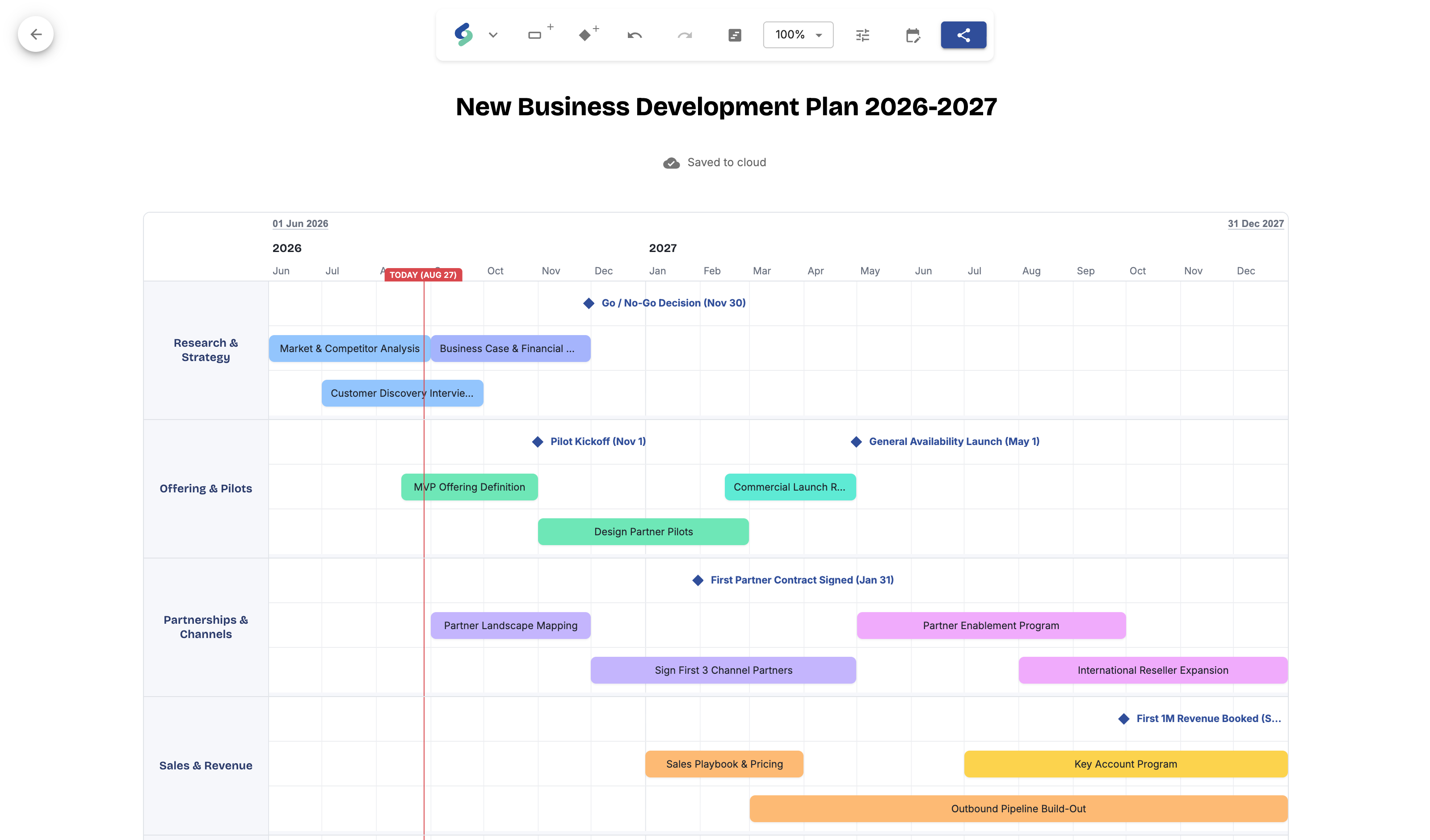
The toolbar
Every control lives in one strip. Hover any button for its name.
 12345678910
 - 1 Main menu — save, open, import, export, back to dashboard
- 2 Add activity — opens the create dialog
- 3 Add milestone — opens the create dialog
- 4 Undo — steps back through your edits
- 5 Redo — steps forward again
- 6 Arrange — expand or compact all activities
- 7 Zoom — 100%, 120%, 150%, 200%, 300%
- 8 Format — timescale, density, text overflow, visibility
- 9 Timeline settings — the canvas start and end dates
- 10 Share — publish a read-only link
Work with activities
An activity is a bar on the roadmap: a piece of work with a start date, an end date and a row to sit on.
Add an activity
There are two ways, and the quick one is worth learning first.
Click straight onto the canvas
Click any empty spot on a category row. Shira creates an activity called New activity right there, starting on the day you clicked and running for 30 days (7 days on the Day and Week timescales). No dialog — rename it and drag its edges to fit. If the spot you clicked already holds an activity, a fresh row is inserted below rather than dropping one bar on top of another. As you move the pointer across the canvas, a tooltip shows the date under it, so you can aim before you click.
Use the Add activity button
Click the Add activity button in the toolbar when you would rather type the details up front.
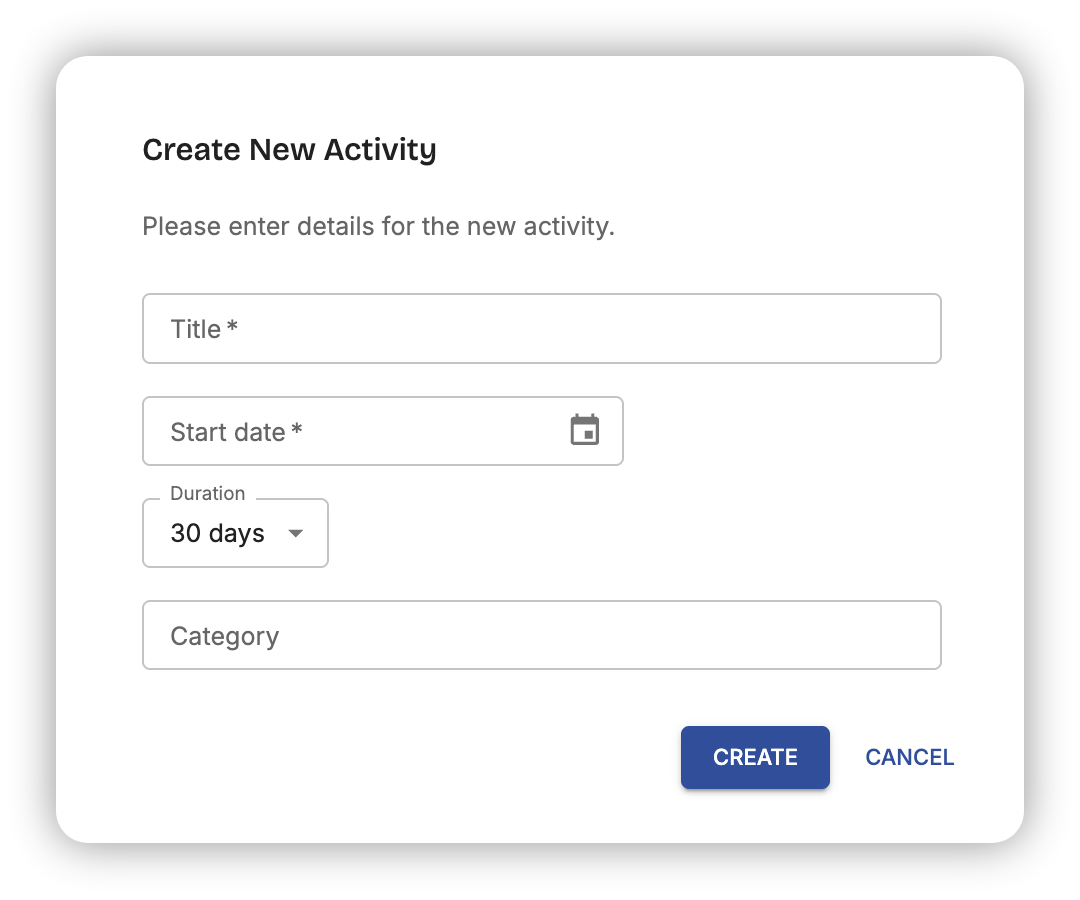
- Title and Start date are required.
- Duration — in days. Choose Custom to pick an exact end date instead.
- Category — optional. Leave it empty and the activity lands in the Uncategorized row.
Move it and change its dates
Hover an activity and it grows two square handles plus a ⋮ menu button.

- Drag the left handle to change the start date; drag the right handle to change the end date.
- Drag the bar itself to move the whole activity — earlier, later, onto another row, or into a different category.
- Hold ⌘ (Mac) or Ctrl (Windows) while dragging to lock the dates, so the activity only changes row or category.
- Drop it below the last row of a category and Shira adds a new row for it.
Edit the details
Click an activity to open its panel on the right.
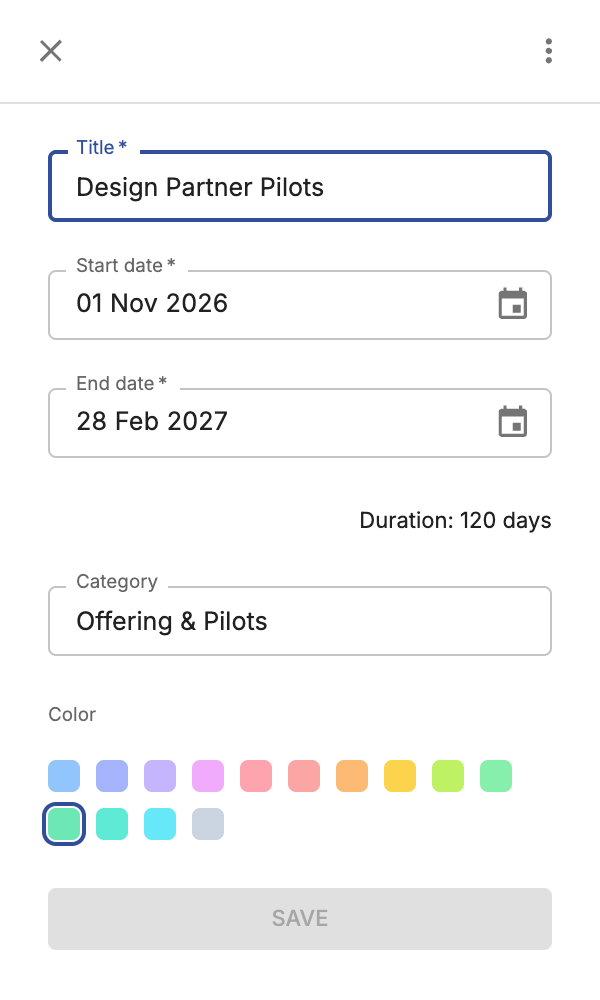
To confirm the changes, click on the "SAVE" button. It stays disabled until something actually changes.
Duplicate or delete
Open the ⋮ menu on the activity itself (hover, then click) — or the ⋮ at the top of the activity panel.
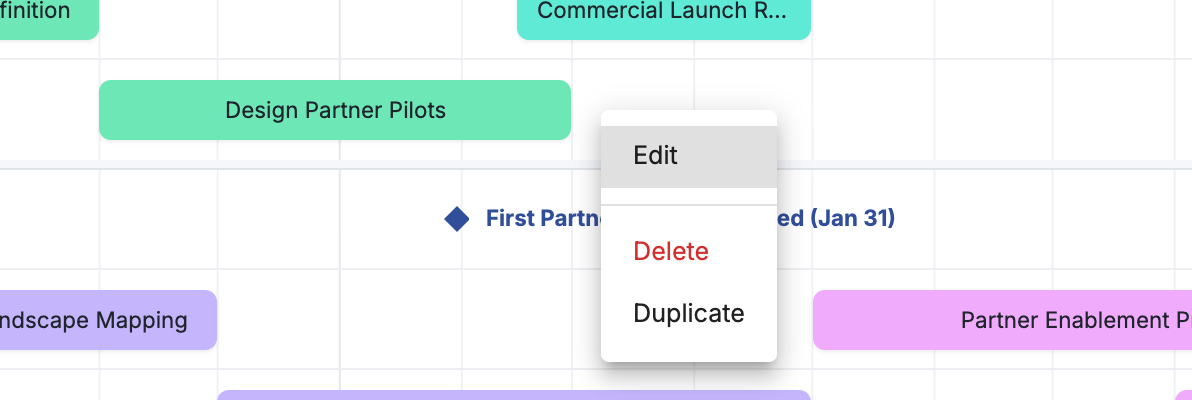
- Edit opens the panel.
- Duplicate drops a copy on a new row directly below the original.
- Delete asks for confirmation first.
Tidy up the rows
Use Arrange in the toolbar to re-stack every activity at once.
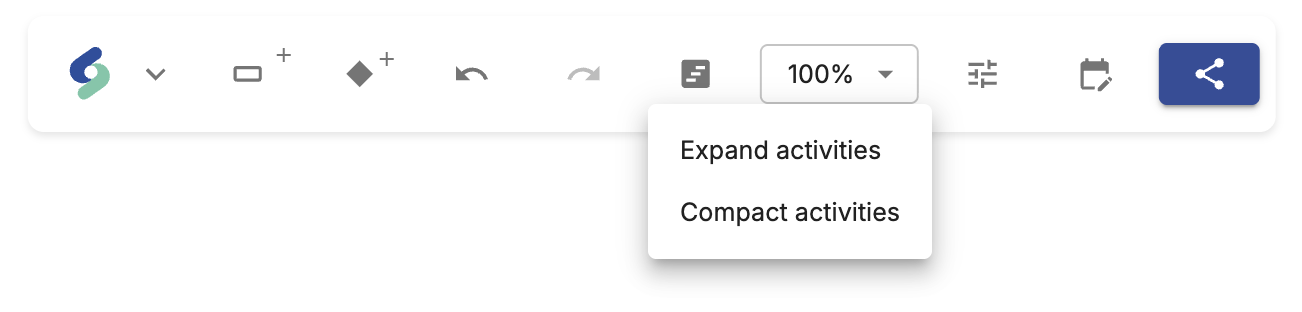
- Expand activities — every activity gets a row of its own.
- Compact activities — each category is packed into as few rows as possible, putting activities that do not overlap in time side by side on one row.
Work with milestones
A milestone is a single dated moment — a decision, a launch, a deadline — drawn as a diamond with a label. Each category gets its own milestone row above its activities.
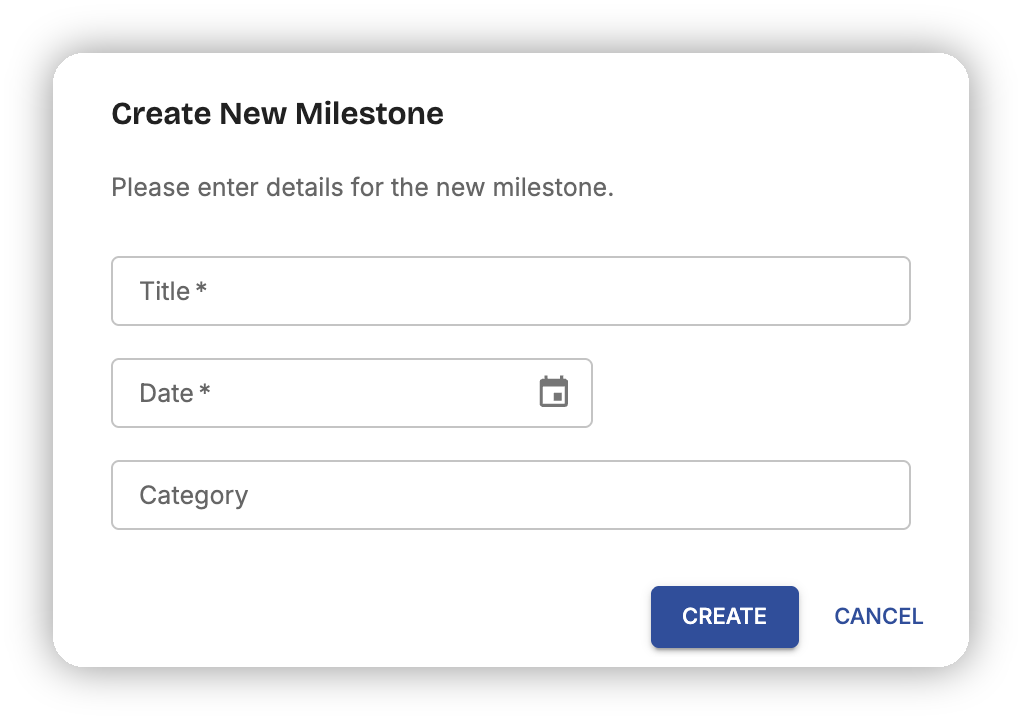
Faster ways to add one
- Click the milestone row — the top row of a category that already has milestones — and one called New Milestone appears on that date immediately.
- Alt + click anywhere on any row does the same thing, wherever you are on the canvas.
Editing milestones
- Drag a diamond sideways to change its date.
- Click it to open its panel and edit the title, date or category.
- Its ⋮ menu offers Edit and Delete.
When several milestones fall close together, their labels would normally overlap and become unreadable. Shira stacks them into lanes automatically and grows the row to fit, so every label stays legible. You never position them by hand.
Categories and rows
Categories are the horizontal bands of the roadmap — one per workstream, team or theme. You never create them from a separate screen: a category exists because something is in it.
- To create one, type a new name in the Category field of any activity or milestone. The row appears.
- To rename one, hover the category name and click the pencil that appears. Every activity and milestone in it follows the new name.
- To reorder, drag a category row up or down by its name.
- Anything with no category collects in a row labelled Uncategorized.
- A category empties out — you moved or deleted its last item — and its row disappears with it.
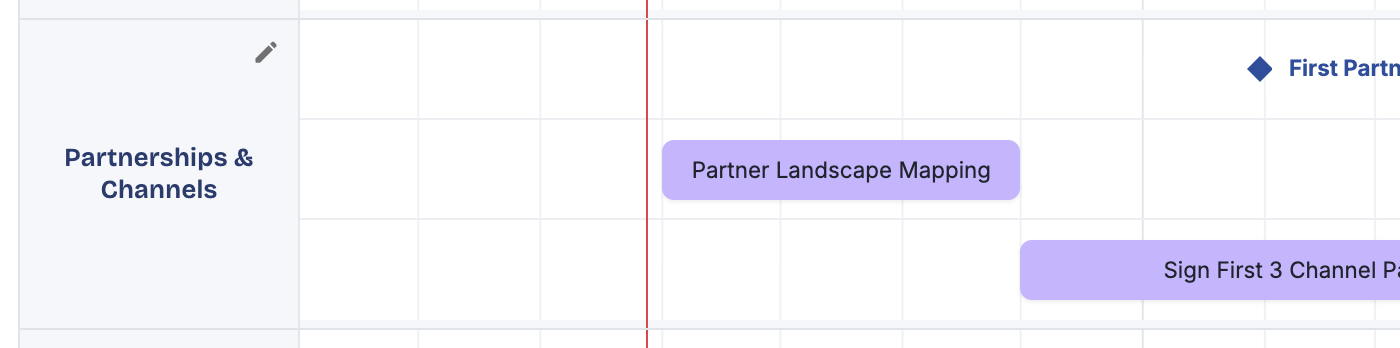
The roadmap canvas
Rename the roadmap
Click the title above the canvas, type, and press Enter. The title is also the filename Shira uses when you download or export the roadmap.
Set the timeline
The canvas covers a fixed window of time. Open Timeline settings in the toolbar to move it.
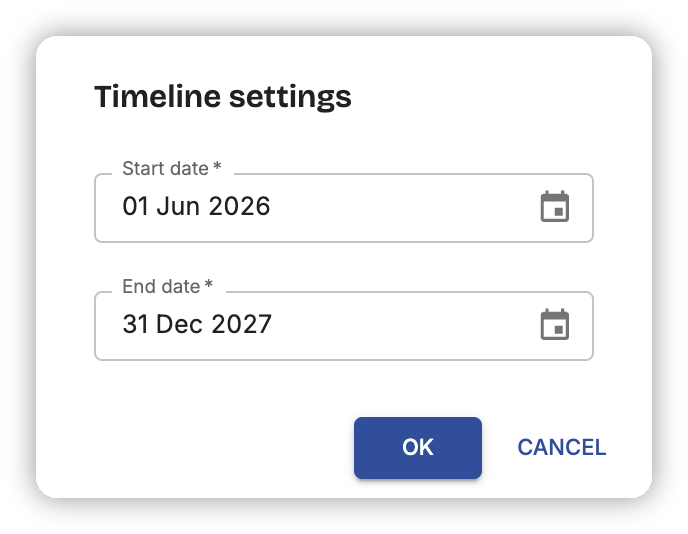
The window must be at least 28 days long.
Activities that fall outside the visible window are clipped at the canvas edge, not removed. Widen the timeline again and they come straight back.
Zoom
The zoom control offers 100%, 120%, 150%, 200% and 300%. Above 100% the canvas scrolls sideways, which is the comfortable way to work on a long plan without shortening the timeline.
Format and timescale
The Format button opens a panel with everything that changes how the roadmap looks — without touching a single date.
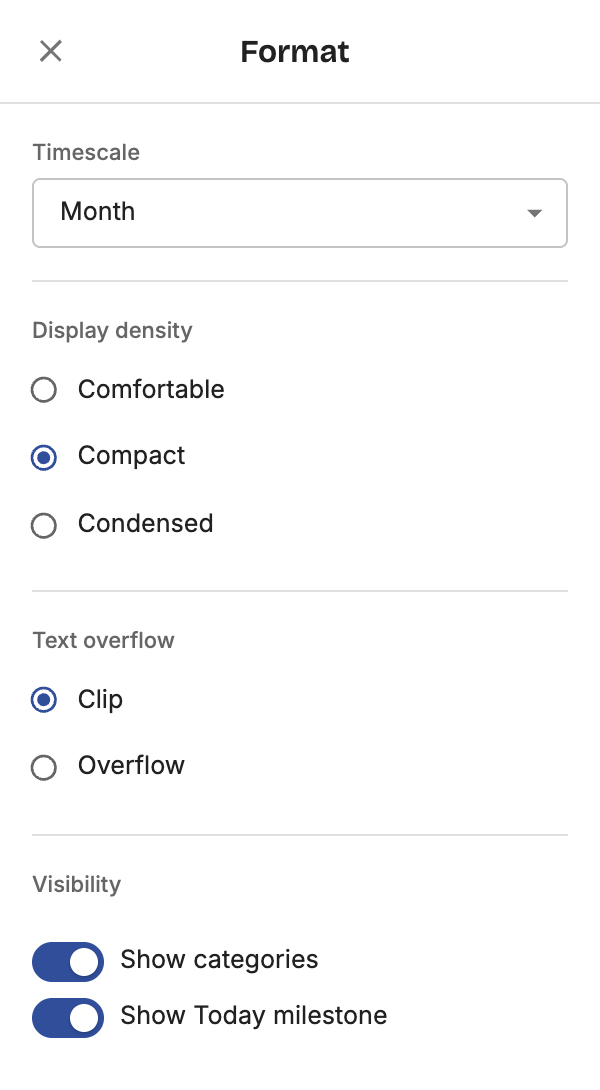
Timescale
Choose how the timeline is divided: Day, Week, Month, Quarter, Half Year or Year.
Day and Week are only available when the timeline is short enough to read at that granularity — up to 45 days for Day and 100 days for Week. On longer roadmaps they are greyed out.
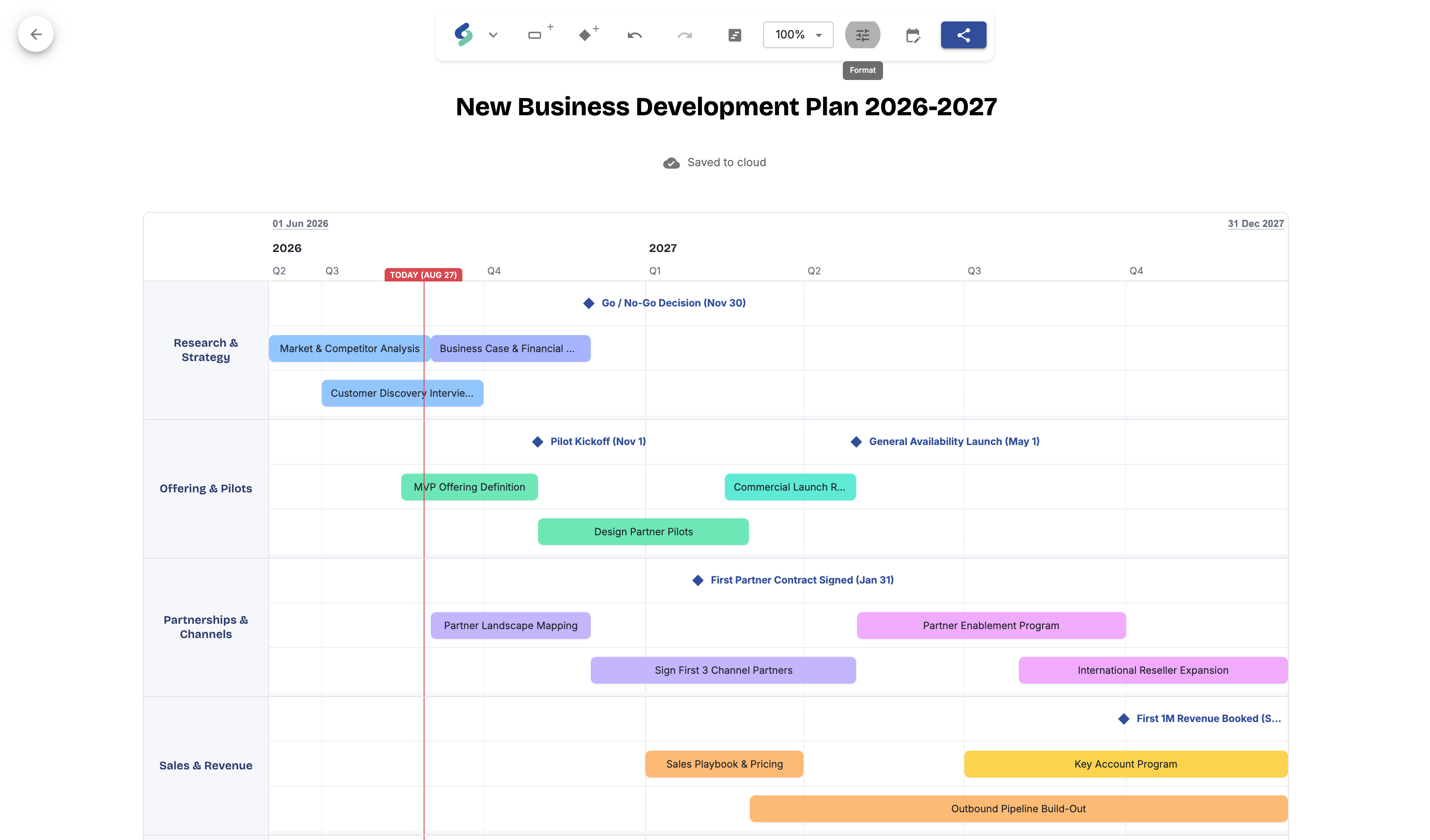
Display density
Comfortable, Compact or Condensed — taller or tighter rows. Condensed fits a long plan on one screen; comfortable gives labels room to breathe.
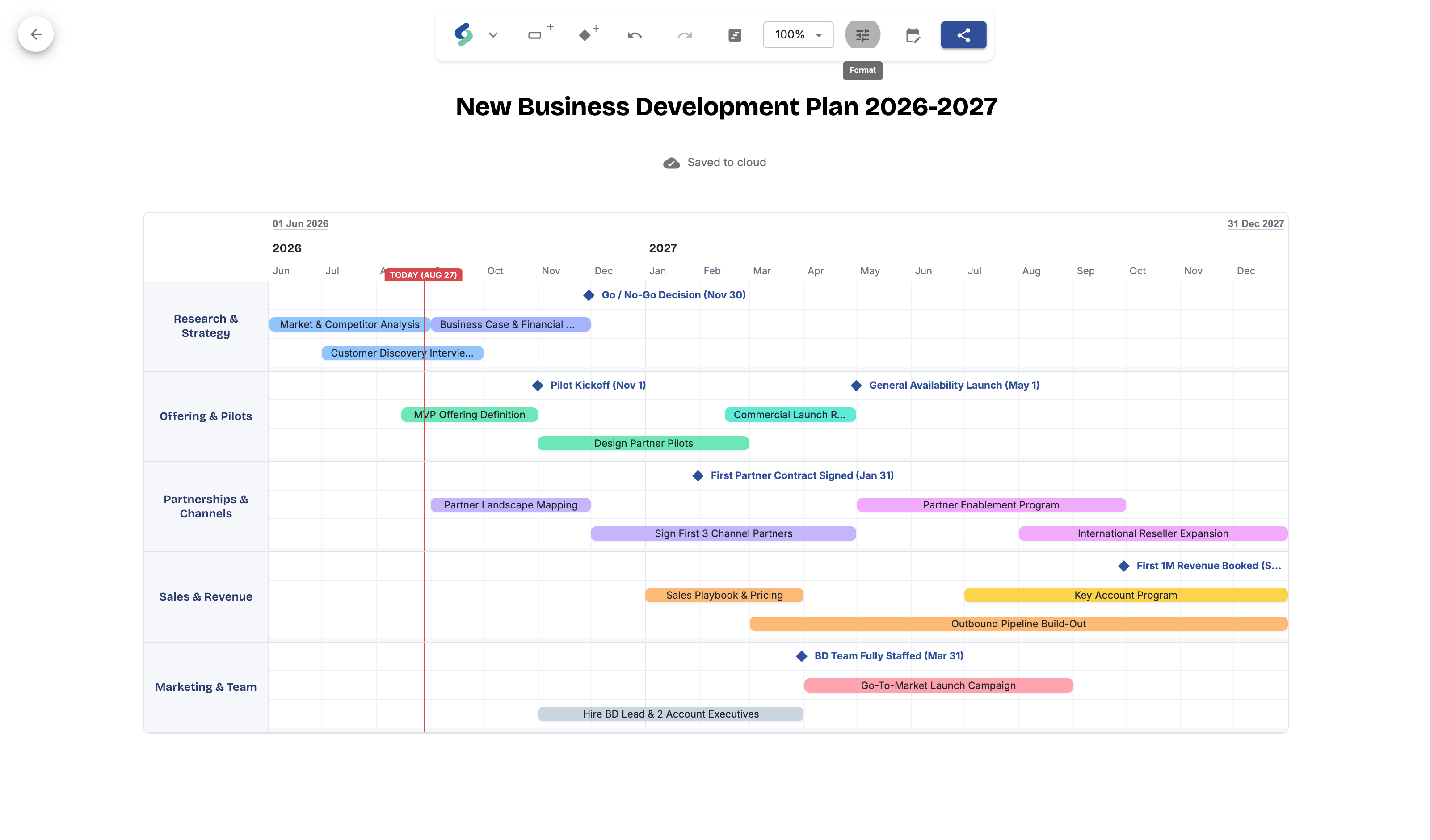
Text overflow
Clip cuts a label at the edge of its bar — hover it to read the full text. Overflow lets the label spill past the bar so it stays readable.
Visibility
Show categories hides or shows the left-hand name column — hiding it gives the grid the full width. Show Today milestone hides or shows the red line marking today.
Save, load and export
Everything in this section lives in the main menu — the arrow next to the Shira logo at the left end of the toolbar.
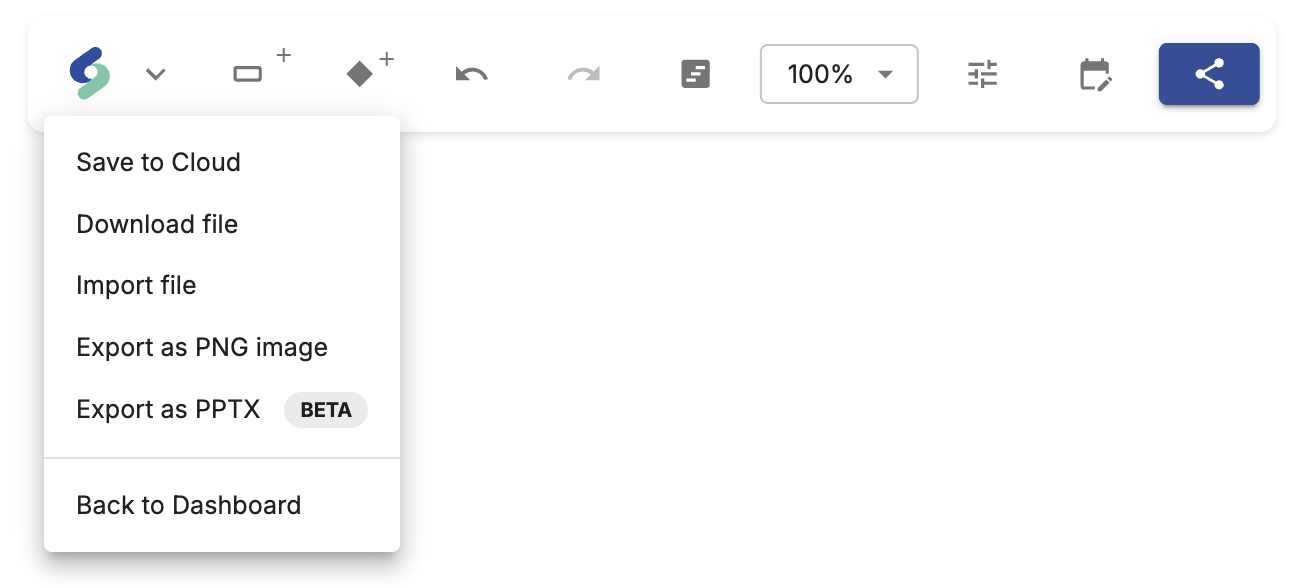
| Menu item | What it does |
|---|---|
| Save to Cloud | Stores the roadmap in your account so you can reopen it from any browser. The indicator under the title tells you whether your work is saved. |
| Download file | Downloads the roadmap as a .shira file named after its title — a plain, documented JSON format you can back up or keep in version control. |
| Import file | Loads a .shira file back into the editor. |
| Export as PNG image | Saves a picture of the roadmap, ready to paste into a document or a chat. |
| Export as PPTX (beta) | Builds a widescreen PowerPoint slide in which every bar, gridline, label and milestone is a real, editable PowerPoint shape — not a screenshot. Recolour or retype anything once it is in your deck. |
| Back to Dashboard | Returns to the list of your roadmaps. |
Every edit — dragging, resizing, renaming, deleting, arranging — goes onto an undo stack. Use the undo and redo buttons in the toolbar rather than starting over. Shira also warns you before clearing or replacing a roadmap that has unsaved changes.
Share your roadmap
Send people a link instead of a file, and they always see your latest saved version.
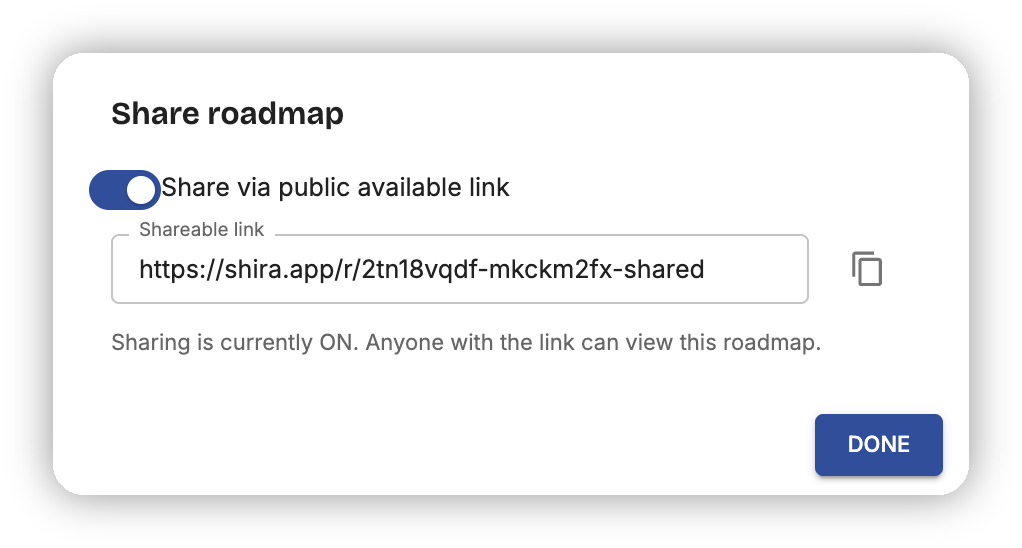
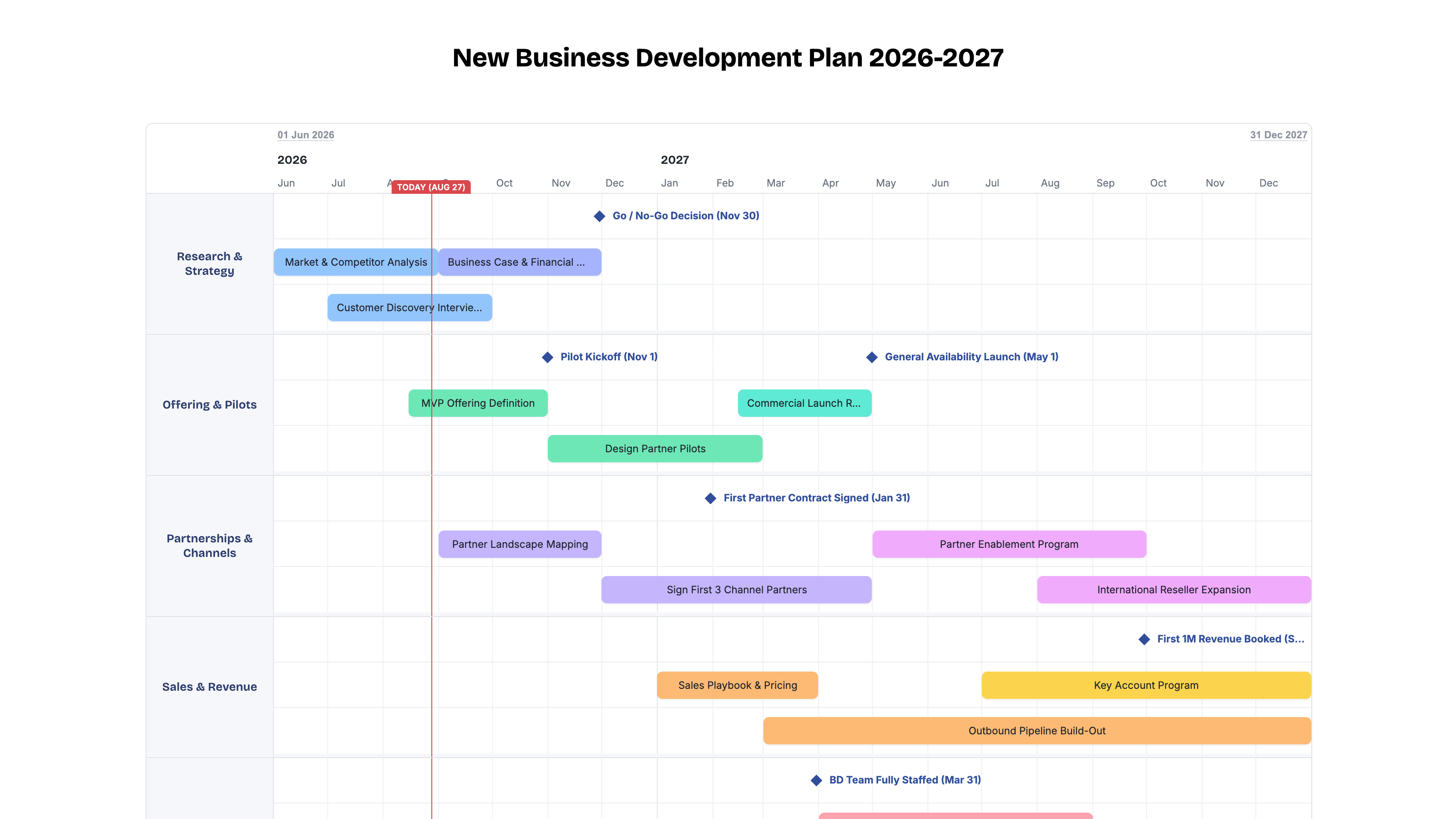
Anyone with the link opens a clean, read-only page. They need no account, no licence and nothing installed, and they cannot change anything.
Mouse and keyboard reference
| Action | Result |
|---|---|
| Click empty canvas | Creates an activity on that date, in that category |
| Alt + click | Creates a milestone on that date |
| Click the milestone row | Creates a milestone on that date |
| Click an activity or milestone | Opens its panel on the right |
| Drag a bar | Moves it in time, between rows, or between categories |
| ⌘ / Ctrl + drag | Moves it between rows or categories, keeping the dates fixed |
| Drag an end handle | Changes the start or end date |
| Drag a milestone diamond | Changes its date |
| Drag a category name | Reorders the category rows |
| Hover a bar → ⋮ | Edit, Duplicate, Delete |
| Click the title | Renames the roadmap (Enter to apply) |
Ready to build one? Open the demo and edit a live roadmap in your browser, or read the .shira file format reference if you want to generate roadmaps from your own data.